Consider the career line that drives you into the center of health care within only one year. Suppose now that it is a critical path as never before. Vocational Nurses programs are undergoing a resurgence. They are no longer perceived as an easy entry point. Instead, they are turning into a strategic fix to a poor system. But is this tidal wave sufficient to tide it over?
We are facing a perfect storm. The population is growing old and requires additional care. Exhausted nurses are abandoning the bedside. This brings a desperate scarcity. To keep up with demand, the American Nurses Association estimates that more than 200,000 new RNs are required annually to supply demand. This trickles down, and this affects all positions. Graduates of LVN Program are filling this gap. They become the lifeline of overworked RNs and doctors.
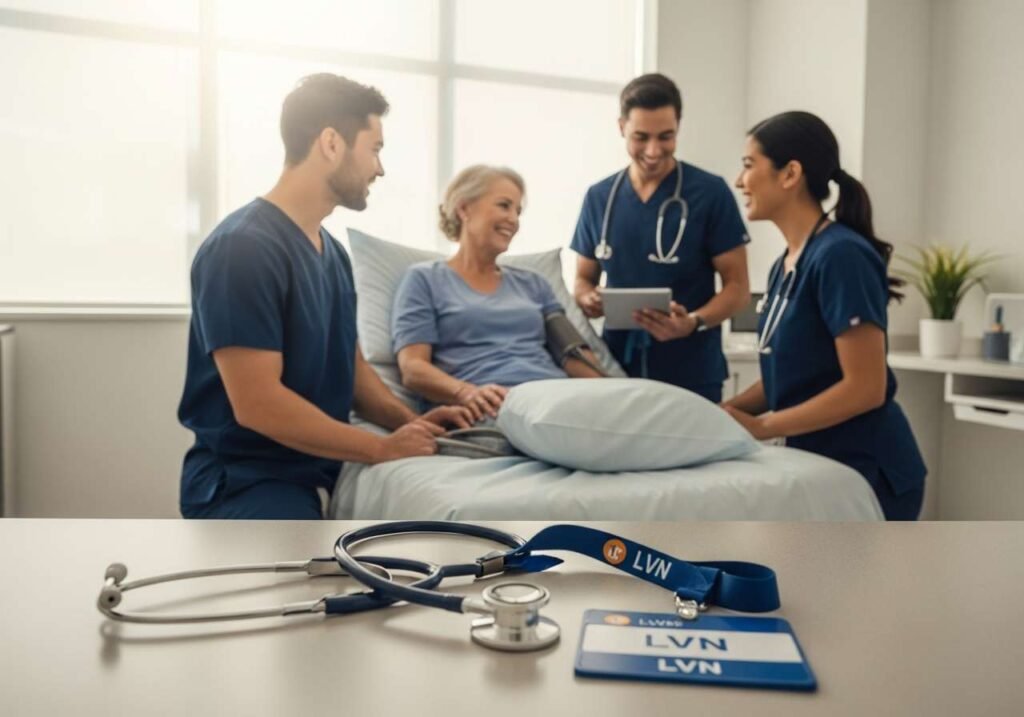
One of the Texas hospital administrators informed me that they are not hiring LVNs to work in the traditional roles anymore. New teams around them we are forming. This new strategy is important. It is a change in the whole paradigm of patient care. And those shows are the focus of that change.
“We regard LVNs as the glue in a contemporary patient care, the transitional tissue between the aide and the RN.”
The Reason Enrollment is Soaring
What is the motivation to this new generation of students? The math is compelling. According to the Bureau of Labor Statistics, LVNs earn a median salary of more than 55000 every year. That is in contrast with the price of a standard program, which is usually less than 15,000. The payback period is evident and quick.
Moreover, individuals desire a solid and meaningful employment. They desire a career with purpose. One of the students in a California LVN Program explained her reason. “I was a server for a decade. I had to have a job that I would be proud of and cannot be supported by the family. This was the answer.” Her story is not unique. These undergraduate nursing courses provide a realistic objective.
Modern education is flexible and this assists. Most schools currently have hybrid courses. Theory is done through the internet. Thereafter, they have practical training in local hospitals. This availability is dismantling ancient restrictions to education.
A Day in the Life: Beyond the Vital Signs
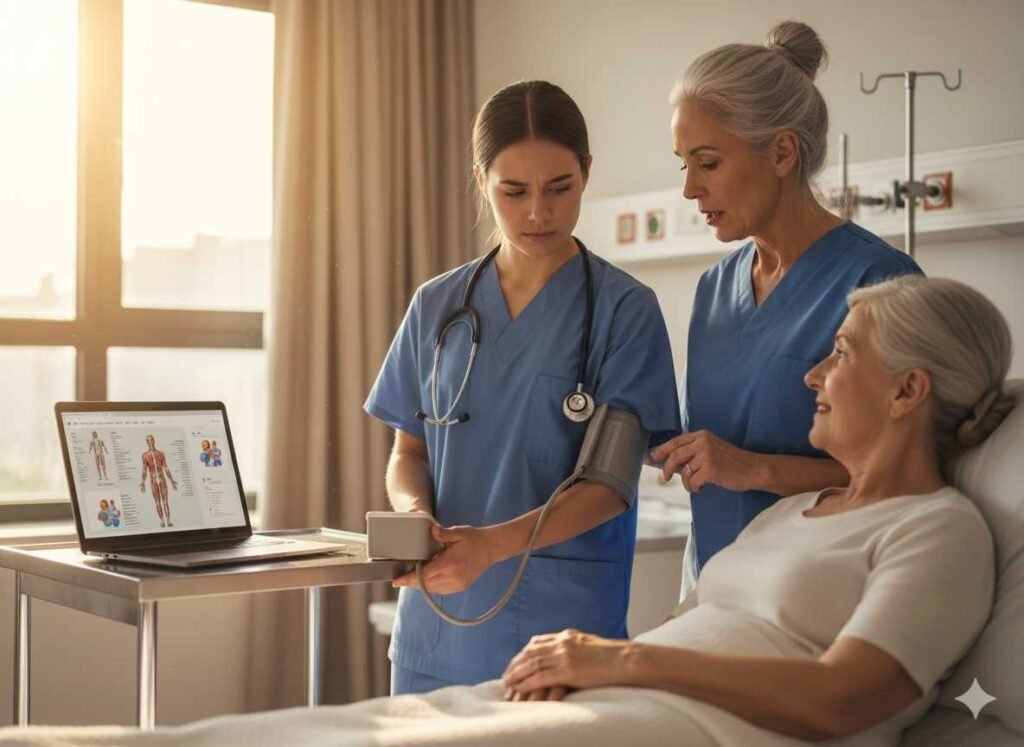
We should dispel one of the greatest misunderstandings. The scope of an LVN has tremendously increased. It is much more than checking a blood pressure. I encountered Sarah Jenkins, LVN, in a busy clinic in the suburbs. She began her day by giving routine vaccinations. Subsequently, she would meticulously record the history of patients on the electronic health records system.
The next thing she had to do was more complicated. She taught a new patient with diabetes on the administration of insulin. This involved patience and profound communications skills. She later helped the doctor in performing a minor operation. Her area is wide and fully incorporated in the team.
“My team has confided in me and that is all that matters. I am applying skills that I never imagined that I would get to learn within a one-year course.”
Real-World Classroom: Specialization and Simulation
Are nursing programs responding to these new demands? The solution is with technology. Labs of modern LVN Program do not resemble the way they appeared two decades ago. They are stuffed with high-fidelity manikins which breathe, bleed, and even complain. Students will be able to rehearse challenging situations without any danger.
As an example, a learner may deal with a simulated heart attack. This brings about a lot of confidence. Moreover, there are some programs that are launching special tracks. Students are able to specialize in such spheres as gerontology or palliative care. This equips them to take high demand niches in health care. The training is also becoming focused and advanced.
Case Study: Lifeline of the Rural Clinic
Take a look at the example of a small clinic in Kansas. It was finding it hard to remain open. The closest hospital was an hour distance. They were not able to recruit sufficient RNs. Their solution? They collaborated with an LVN Program of a local college.
The clinic was converted into a clinical rotation site. They employed graduates on a direct basis. These LVNs now handle clinics of chronic diseases in diabetes and hypertension. They deal with wound management and education of patients. They are monitored by the physician assistant of the clinic. This model has made the doors open to a community of 3,000 people.
This case makes a critical problem. The solution may be the most costly, but not always the best. It is the most realistic and viable one. Such nursing programs are producing community anchors.
Overcoming the Obstacles
The journey ahead is not even smooth. The nursing faculty shortage is one of the biggest challenges. Who will be the teachers to the next generation? Senior LVNs have seen that they can achieve higher wage rates in bedside than in classroom. This puts an ailing squeezer.
The other problem is the presence of different scope-of-practice statutes. What one state may allow an LVN to do may be illegal in another state. This misunderstanding may restrain occupational movement. We should have more standardized laws. The system will have to develop to take care of its own labor force.
Nevertheless, the trend cannot be disregarded. States are putting money in granting money to students. Hospitals are also providing tuition reimbursement. The support systems are gradually coming into place.
The Future is a Team
So, what is the final takeaway? The traditional hierarchy in health care is narrowing. The next star role is not in the future. It concerns a team that works and works together. LVN is one of the key members of such a team. Their value is immeasurable.
These are not a temporary measure of nurse programs. They form a force and an indelible component of the remedy of our staffing problem. They should be financed, promoted and honored with their graduates. Since once we reinstate this point of entry we reinforce the whole building block of health care. The question is, will we provide them with the means and the credit they are worthy of? This solution will determine the quality of care to millions.