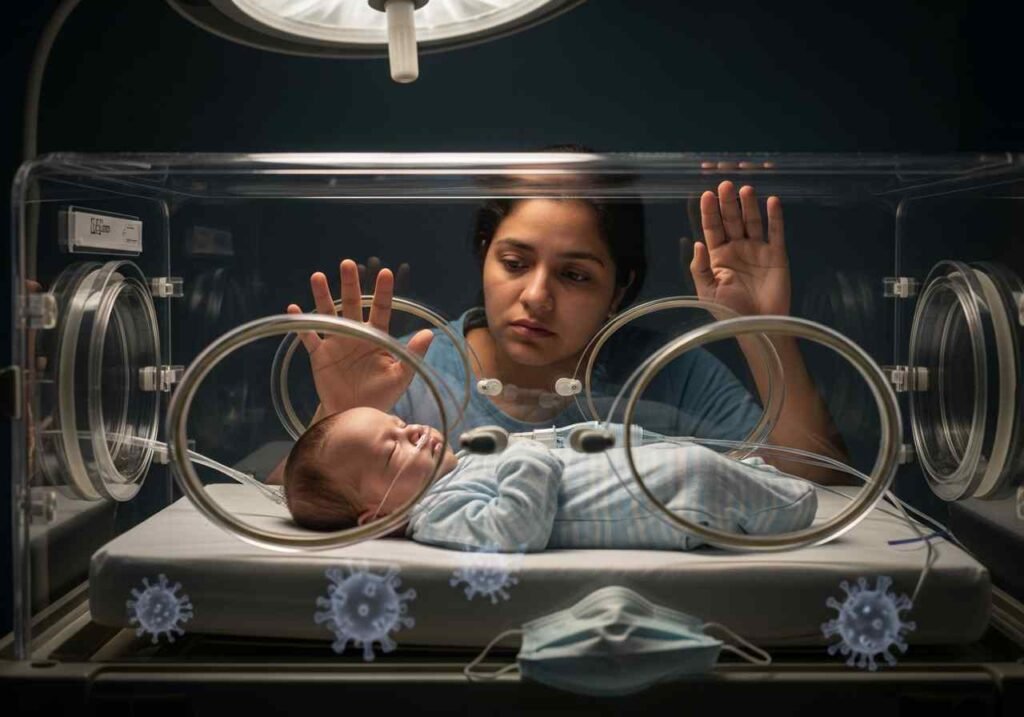
No memory of a sniffle that had a common cold in it? That will no longer be true to a generation of kids born during or right before the pandemic. Terrifying new reality is confronting the pediatric ICUs. It is like the behavior of viruses that we have been familiar with over the decades acting in completely unpredictable and harsh ways. This is how the pediatric immunity gap is a story. It is a complicated health care issue which is transforming early childhood.
A Perfect Storm in the PICU
Enter a children hospital during July. You’d expect it to be quiet. Rather, you encounter halls that are filled with cribs. Little patients find it difficult to breathe. And this was the new normal last summer. The winter bug, Respiratory Syncytial Virus (RSV) had an alarming summer outbreak.
- In Boston Children Hospital, a lead nurse of the ICU reports that they had to cancel elective surgeries to staff the ICU.
- The CDC verified an increase of 30 percent in the hospitalization of RSV among infants below 6 months.
This wasn’t a fluke. It was a direct result of years of seclusion. Defenses that we needed to manage COVID-19 imposed an unwanted weakness in our youngest population.
So What is the Existence of an Immunity Gap?
And now we will dispel an illusion. This is not the case of poor immune systems. It’s about untrained ones. Consider the immune system of a child like an army that is new. In normal sense, it encounters hostile in small and manageable skirmishes. The cold is a training exercise in itself. However, the lockdowns and masks, which were measures related to the pandemic, made a peace-time army.
At the same time various old viruses reappeared. The poorly trained recruited immunity was overpowered. They then initiated huge and uncontrolled attacks that would lead to severe inflammation. This is what makes the hospital bed of children with a mere virus.
RSV Leads the Charge
RSV has taken the place of the villain of the story. Practically every child was infected by the age of two prior to the pandemic. Their bodies knew the drill. Our group of three and four year olds is now exposed to RSV infection in their first ever infection. Their airways are larger than those of a baby although there is a chaotic immune response.
- According to a study carried out in The Lancet, cases of severe bronchiolitis had increased by 40 percent.
- Physicians complain of increased hospital stay and oxygen demands.
This virus is taking advantage of the immunity gap in a ruthless way. As such, it is putting a strain on health care resources.
The Domino Effect of Other Viruses
RSV isn’t acting alone. It belongs to a hazardous syndemic. There is also an extreme circulation of rhinovirus and enterovirus. Then there’s influenza. It returned with a vengeance after almost disappearing. A decade later the 2022-2023 flu season caused some of the highest rates of pediatric hospitalizations that were observed.
Suppose the body of a child is a fortress. It has a structure that is tailored to combat individual invaders. Suppose, however, that there were three armies attacking the gates at the same time. The defenses crumble. This is a multi-viral attack at the heart of the health care crisis.
An actual Case Study: The case of Baby Liam
Take the case of baby Liam who is a healthy 15 months old in Atlanta. He used his first year in major isolation. Last fall, he started daycare. He developed a runny nose in less than a week. Two days afterwards he was breathing fast. He was taken to the ER by his parents.
He was found to have RSV and rhinovirus co-infection. Baby needed high flow oxygen within four days. He was a healthy baby, according to his mother. “We did everything right. This is something that a cold could never do. It is a tragically typical story of his. It brings out the precarious nature of children health care.
New Weapons in Our Arsenal
There is hope, however. Medical science is changing rapidly. An innovative new tool is present. It is a long-acting monoclonal antibody injection known as nirsevimab (Beyfortus). Tool is not some standard vaccine. It does not do that, but rather injects the infant with pre-prepared antibodies.
- It has been clinically proven to decrease RSV hospitalization by more than 75 percent.
- It has been unanimously recommended by the CDC among all infants below the age of 8 months.
Moreover, another line of defense is provided by new RSV vaccines of the pregnant women. These inventions are the paradigm shift in preventive health care in our most vulnerable.
Professional Opinion: Ground-Level View of a Pediatrician
We interviewed Dr. Maria Santos, who is a more than 20-year-old pediatrician. She’s seen it all. But this is different. The hand of childhood illness has been shaken, she said to me. My waiting room has become an exhibition of anxious first-time mothers. They feel guilty. They believe that they have done something wrong.
She spends the majority of her visits in reassuring them. “This isn’t their fault. It’s a population-level issue. Now we have to do watching rather than accusing. Her perspective is crucial. It relates the information to the human experience within the health care system.
This has implications on your family
So, what can you do as a parent? First, don’t panic. Knowledge is power. Be watchful of the symptoms of acute respiratory distress. Watch out to breath quickly, grunt or suck the chest in. Emergency medical attention should be sought in case of these.
Second, act as an advocate of the health care of your child. Be curious about the new antibody to RSV used by children. Make sure that your child is taken care of in flu and COVID vaccination. These protective layers have never been as important as it is.
One last word: The Tradition of Protection
We have shielded our children against one virus and have ended up exposing them to others. No villainous presence here, but the complicated balancing of the health care of the people. The immunity gap does not result in a permanent scar. The science, vigilance and compassion have one hard task that has to be met. The immunity that we have lost needs to be rebuilt now, but step by step.