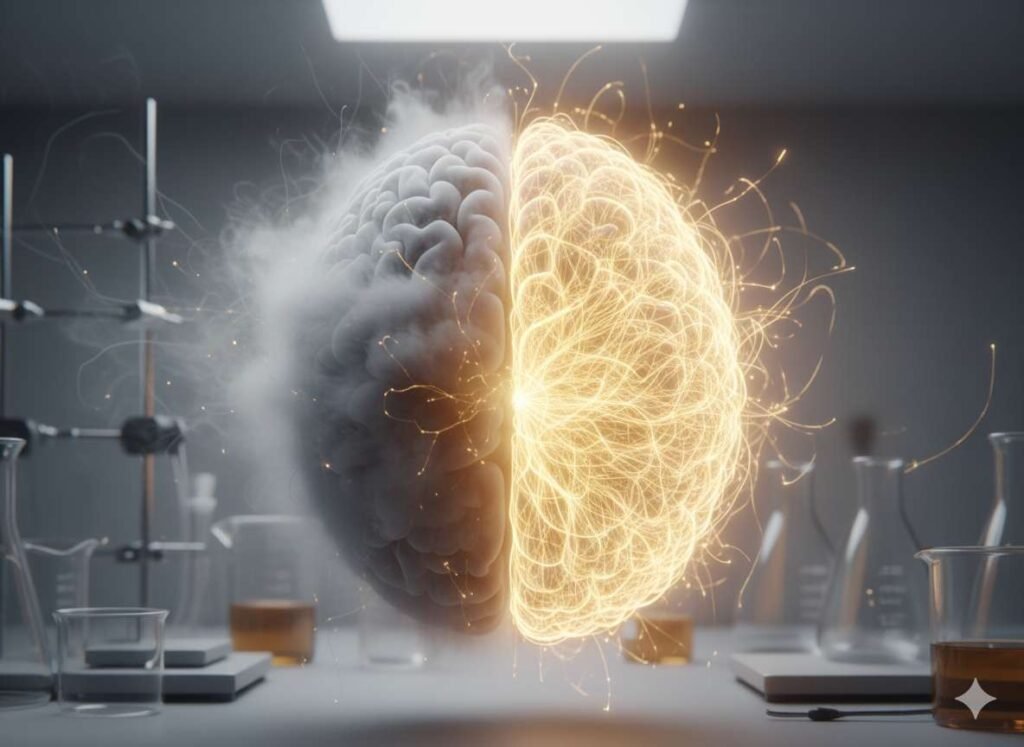
You have embarked on Keto Diet in order to lose weight. Something happened though, to my surprise. The fog of the mind that had seemed like a kind of static in your head… had cleared. You’re not alone. Thousands report of this clear mindedness. Is it, however, a true neurological transition? Or some strong magic of the mind?
The solution lies somewhere in between yes and no. We mean pawed through the new science and professional thought to discover.
Seizures to Sharpness: A Medical History
The Keto Diet is a century-old initiative of doctors. It was mainly used to prevent epileptic seizures among children. This fact is crucial. It demonstrates that the diet has a direct effect on the brain functions. How can a treatment to a serious neurological disorder prove to be a mental focus tool? This is one of the questions, which motivate contemporary studies on ADHD and brain trauma.
The historical achievements of the diet give it a strong ground. It’s not just a fad.
Your Brain on Ketones: More than Anecdotes
Then how is it really going in your brain? Cutting carbs causes ketones to be produced by the body. These aren’t just byproducts. They are an energizer of your brain-cells.
- Clean Energy Boost: There is one expert who compares glucose to the dirty gasoline. It is the one that makes the engine work, but causes gunk. Ketones are however like high quality fuel. They are clean and burn more efficiently producing more mental energy.
- Combating Inflammation: Brain Fog is a major contributor to chronic brain inflammation. Keto Diet is a strong anti-inflammatory diet. In a 2023 review published in Nutrients, it was noted to reduce cloud thinking caused by inflammatory markers.
This isn’t just theory. It is a biological cascade, which can alter your way of thinking and feeling.
The Verdict of Science: Hopeful and Changing
There is still the development of strong clinical trials of cognitive enhancement. The available data is however convincing. An example of this is in a pilot study on ADHD adults, which demonstrated high levels of symptom improvement. Within a month, the participants had reported improved focus and control over their emotions.
Study on traumatic brain injury is even greater. The ketones act as an alternative energy source to the brain cells that are affected by glucose deficiency. This can aid recovery. In the meantime, reports of age-related decline discuss the protective effect of ketones on the neurons. The accumulated evidence is creating an excellent case.
The Other Side: Is it the Placebo Effect?
The elephant in the room has to be discussed. Belief is a potent medicine. You are not going to make a significant health change without expecting results. This great pressure can generate actual perceived advantage. Do you feel that your concentration has been better due to ketones? Or have you stopped consuming sugar and processed food?
The fact that blood sugar spikes and crashes are reduced radically is enough to clear mental clutter. It becomes difficult to put ketosis as the isolated hero. The good experience is a reality. However, its cause of origin may be complicated.
The opinion of a Clinician: Who is the greatest beneficiary?
There is an evident trend in the practice of Dr. Elena Martinez, a functional neurologist. She observes that the results are not the same. The mental clarity is dramatic in the case of my patients with insulin resistance or metabolic problems. It is what they report on the first thing and even before significant weight loss.
She relates that in these people their brain was failing to utilize glucose effectively. Ketones offer a way out. This is a peculiar point of view, which indicates that the cognitive benefits of the diet are very individual. It is effective on a particular biological profile.
Real Life, Real Outcomes: The Story of Maria
Take the case of Maria who is a 42 year old project manager. She has turned to Keto Diet in an attempt to control her weight. Maria had trouble with incurable post-lunch Brain Fog too. She says she would hit a wall at 2 p.m. everyday. “My thinking turned to mud.”
The afternoon crash disappeared within two weeks of the change-of-diet. “The fog didn’t just lift. It had been substituted by an even concentration on the whole day. This also served as energy to keep her to the plan. Her emaciating condition was practically a by-product of her new-found intellectual acuity.
Her experience is one of the potent testimonies of the possible side effects of a diet.
The Last Word: a Tool, not a Magic Pill
Thus, is the clarity of the mind with the Keto Diet real? Scientific processes are well grounded. The evidence of anecdotal nature is overwhelming. It’s likely not just* a placebo. It is a true metabolic intervention that has far-reaching implications on the brain.
The key takeaway? This is not a panacea to all. However, when you have a problem with an uncooperative brain fog, it may be a metabolic problem. Your mind may be starving with a purer fuel. Still, it may not be life imprisonment in your head. It might be merely the voice of a brain on the bad gas. It might be one to find the right one.