Never forget that search bar that knows what you are thinking? Microsoft is building it. Their new Recall feature of Copilot+ PCs serves as an ideal, searchable picture of your whole digital existence. However, what will become of that intimate memory when it is hacked? A heated debate is now in place in the IT and Cybersecurity worlds. Is this how the productivity of the future will be, or a menacing excess?
What Exactly Is Recall Doing?
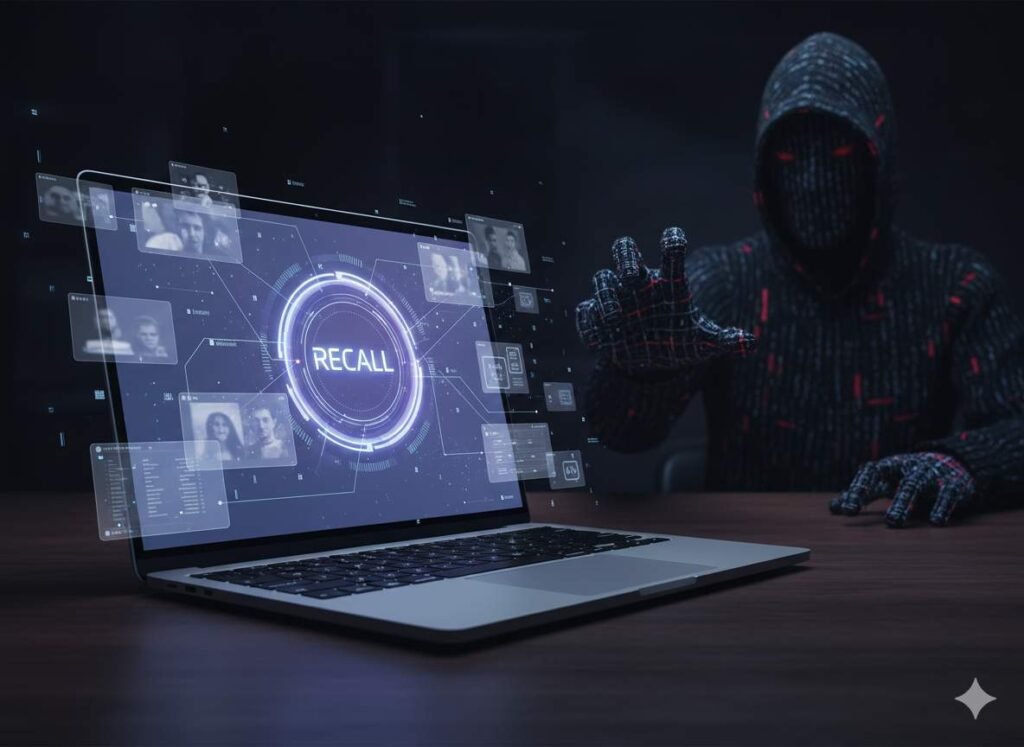
Envision all the clicks, all typed letters, all flash websites. Recall captures it all. It makes repeated screen shots with a specific artificial intelligence chip. This occurs on your device all the time. Microsoft is offering security by way of local storage. All your history on computers is a searchable database. You may say, “Give me that blue dress I was at last Tuesday, and it will know.
“Recall is a forensic data storage that is generated with no user authorization. A security researcher demonstrates the various viewpoints and theoretical methods to identify information about the offensive.” — Kevin Beaumont, Security Researcher.
This is not only the browser history. It’s everything. Private messages. If it is company work, secret work. Passwords you type. The feature is turned on by default. Privacy advocates have already been outraged by this opt-out strategy.
What Is it So Bad About Cybersecurity Experts?
The main issue is availability. Kevin Beaumont, a security researcher proved that there is a critical flaw. He discovered that Recall database is readily readable. Basic user permissions can be used to steal its entire contents by malware. This is not a high-tech attack. This data could be easily collected by common infostealer viruses.
Consider the consequences a while. One violation reveals months of operations. Your banking information, personal discussions and company secrets are exposed. This becomes a treasure trove to hackers. The local storage argument gives a false impression of security. Only the login of your device provides the level of security of the data.
“Ransomware groups will have a prime target in this.” – CSO Online Analysis
The Cyberspace infrastructure required to defend this information is colossal. It is a nightmare to Network Administration teams. Any Copilot+ PC turns into a high value target. How are they to be able to obtain such a volatile mass of data?
One Real-Life Case Study The Invisible Threat
We shall take the example of a small architectural firm. They deal with client blueprints that are sensitive. A new Copilot+ PC is used by an employee in designing. Background Recall is a background program that lists all projects files. One day the employee clicks on a malicious link in phishing email.
Normal infostealer virus is installed. It does not require access at high level. It merely searches and extracts the Recall SQLite database. The attacker has all the designs, email of the clients and schedule of projects within hours. The intellectual property of the firm is totally affected. This isn’t science fiction. It is a realistic scenario as per the present-day threats associated with Cybersecurity.
The Cloud Computing Angle and Defense of Microsoft
The reaction of Microsoft focuses on user control. They emphasize that processing occurs locally at the device. They also refer to encryption as well as the provision of stopping collection. Their dominating mantra is The data is yours. However does that actually alleviate the risk?
Remarkably, this drive towards local AI goes in the opposite direction with Cloud Computing trend. The majority of the major AI features are cloud-based. This local approach is novel. Nevertheless, it puts the whole security burden on the user and the integrity of his/her device. This is a paradigm shift to the enterprise IT departments.
The More Significant Thing in AI and Data Analytics
This scandal is an element of a far greater debate. We are scrambling to the future with AI on board. The Recall feature is a novel step in Data Analytics. It is a type of excessive personal Data Analytics that occurs without intervention and on a continuous basis.
But where do we draw the line? The possibilities of abuse are appalling. Consider this technology in a library or an educational establishment. The potential of Data analytics is unbelievable. However, the privacy aspect is dreadful. This presents a hard violation. Is it tools that we are making that will benefit us, or systems, which spy upon us?
An IT Personal Perspective
Being in the IT industry after twenty years, I have experienced the trends of change. This feels different. Recall is not any ordinary feature but is a radical change in risk. We invested years on training users to prevent phishing. Today a single mishap can reveal not only the existing data, but also all their digital history. The area of attack is not merely expanding, it is forming a deep historical catalogue.
What’s the Path Forward?
So, what can be done? The short-term solution is to ensure that Recall is an opt-in only. Forced adoption is a time bomb. Secondly, management tools of enterprise Networks must have instant controls. They should know how to turn Recall off in all the company devices without struggle.
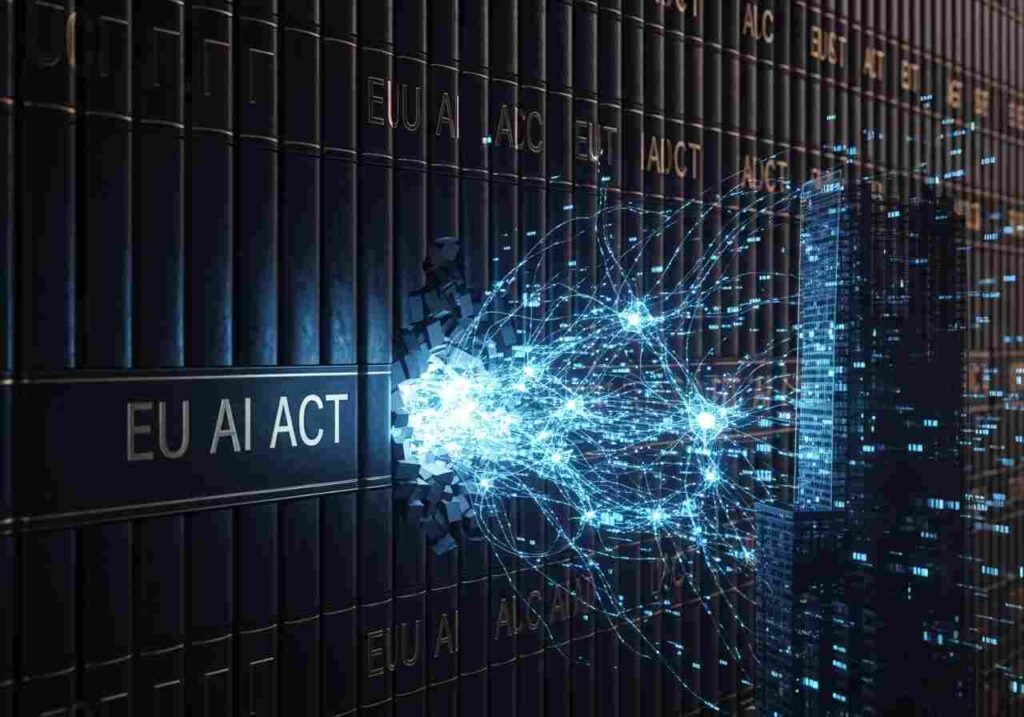
A community discussion on digital boundaries is also needed. Our ethics and laws are not keeping up with the AI industry. Such characteristics as Recall prove the necessity of new regulations. We should control what can be defaulted.
Final Thought
The Recall, which was created by Microsoft, is a beautiful technical work. It is also a great invasion of privacy. It gets in a mix of what is possible and what is prudent. Authentic AI innovation should be in tandem with a corresponding dedication to user safety and Cybersecurity Ethics. other wise we are not constructing a future. We are simply constructing a more well-surveilled prison.